Choose sustainable office chairs by asking what supports their continued use and what evidence supports their environmental claims. Compare repair options, product documentation and the practical route for each chair when your organization no longer needs it. A broad sustainability label is a starting point for questions, not a complete purchasing specification.
For a workplace project, put those questions alongside fit, design, delivery and service. The goal is a chair your team can use, maintain and manage with confidence.
Key Takeaways
- Request evidence for the exact chair configuration being quoted.
- Ask how worn components can be serviced and who will do the work.
- Distinguish recycled material content from a practical recycling route.
- Assign responsibility for maintenance and end-of-use planning before purchase.
Start with a specific claim, not a green label
A useful sustainability claim tells you what has changed, which product it applies to and how it was evaluated. A description such as “made with recycled material” should lead to a request for the relevant product documentation.
The EPA explains that environmental labels can address one issue or several. A label focused on a single attribute does not answer every question about a product's life cycle. For buyers, the practical implication is to identify the scope of each certification or claim before treating different labels as equivalent.
Organize the evidence around your project's priorities. If material selection matters most, request documentation that addresses it. If ongoing service is a priority, add service instructions and parts information. Keep unanswered items visible rather than filling them with assumptions.
Look closely at the components people use every day
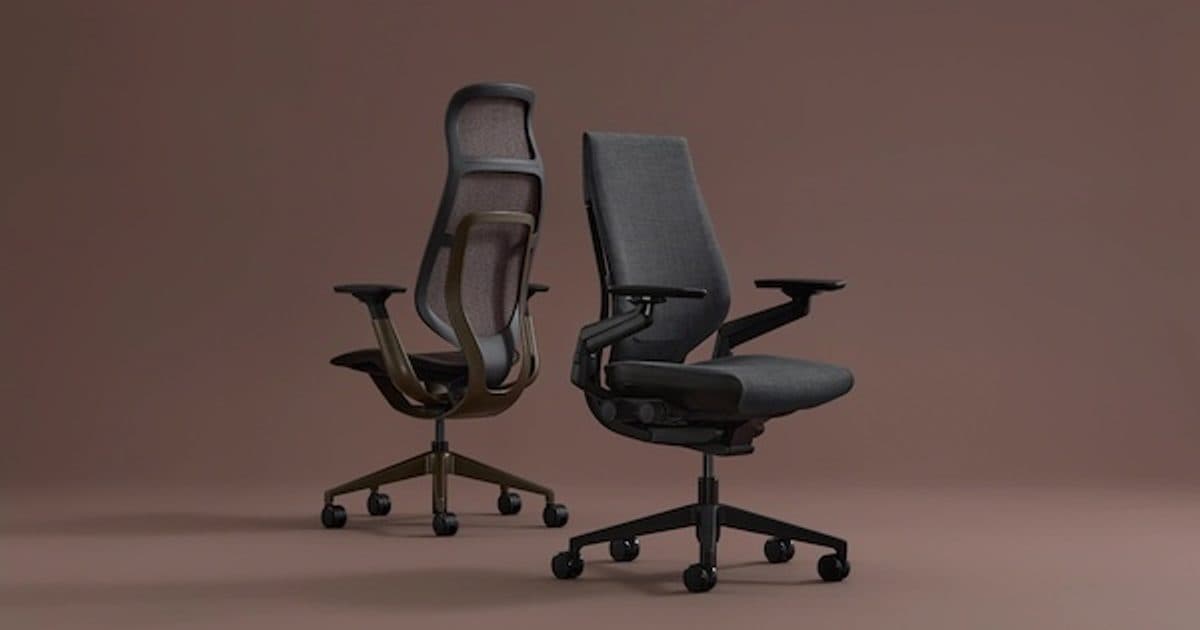
Steelcase's article on rethinking small chair components describes an arm cap that uses flexible fins in place of foam. The manufacturer presents the design as an effort to combine comfort, durability and easier disassembly. It is a specific example of material innovation in task seating, rather than evidence that every chair has the same construction or end-of-use options.
The buyer's next step is to ask whether that component is included in the exact chair being proposed. Model name alone may not answer the question. Request confirmation against the quoted configuration and market, along with any relevant service and material documentation.
Extend that same attention to the rest of the chair. Build a list of components to discuss with the supplier, such as arm caps, casters, upholstery and adjustment mechanisms. The purpose is to discover what can be serviced independently and what requires a larger replacement.
Use one evidence checklist for every shortlisted chair
Send each supplier the same questions. A consistent comparison makes omissions easier to identify and keeps a compelling product story from substituting for documentation.
| Area to compare | Evidence to request | Question to resolve before approval |
|---|---|---|
| Product identity | Exact model, options and quoted configuration | Does the evidence apply to what we would receive? |
| Repair | Service instructions and replaceable-parts information | Which components can be replaced independently? |
| Service access | Current parts process and service contact | Who diagnoses the issue and arranges the work? |
| Durability | Applicable testing information and warranty terms | Does the proposed use fit the documented conditions? |
| Materials | Product-specific material and recycled-content documentation | What does each claim measure and cover? |
| Certifications | Current certificate and scope | Is it valid for this product and relevant to our goal? |
| End of use | Available reuse, return or recovery options | Which route could our organization actually arrange? |
Treat this as a decision worksheet. It is not a certification system, and it does not produce a universal ranking of chairs. Record both the answer and the document that supports it.
When evaluating commercial furniture options, keep the worksheet with the furniture schedule. That way, later substitutions can be checked against the same requirements.
Make repair part of the purchasing conversation
A repair plan needs more than the statement that parts are replaceable. Ask how your facilities team would identify the part, order it and arrange installation. Request current information on cost, availability and service responsibilities where those details affect the decision.
Consider a hypothetical chair with a worn arm cap but a serviceable seat and mechanism. Before deciding whether to repair or replace it, the facilities team needs the correct part, an approved repair method and an estimate of the work involved. Record those requirements while the supplier is involved in the purchase.
Read the warranty alongside that discussion. Ask which components and uses it covers, how a claim is submitted and which expenses remain the buyer's responsibility. Keep repair availability and warranty coverage as separate entries in your comparison so neither is assumed from the other.
Assign an internal owner for service records. Model details, purchase dates and supplier contacts are much easier to use when they are stored together.
Confirm a real destination at the end of use
Separate what a product contains from what your organization can do with it later. Ask for an actual route when a chair leaves service: reassignment within the business, an available reuse partner, a manufacturer program or a recovery provider that will accept the item.
For each proposed option, confirm eligibility, geography, condition requirements, transport arrangements and cost. Do not count a program as part of your plan until someone has checked that it applies to the project. Reconfirm those details when the time comes to use it.
If recycling is proposed, ask which components the provider accepts and what preparation is required. A material description by itself is not a collection arrangement. Keep a named contact and written instructions with the asset record.
This planning also belongs in a relocation or reconfiguration project. Before replacing an entire group of chairs, create an inventory and identify which items deserve a closer review for continued use.
Balance environmental evidence with workplace fit
A documented material improvement is one part of a furniture decision. The chair still needs to serve the people, tasks and setting for which it is selected. Include office ergonomics in the evaluation and resolve fit questions before a larger order.
Bring the shortlist into the broader space planning process. Review the chair's intended use, appearance, service needs and supporting evidence together. Write down the reasons for the final selection so future purchases can follow the same priorities.
OFDC Commercial Interiors helps Southwest Florida businesses approach furniture as part of a considered workplace design. Discuss seating requirements for your next project.