
Sarasota Community Foundation
Sarasota
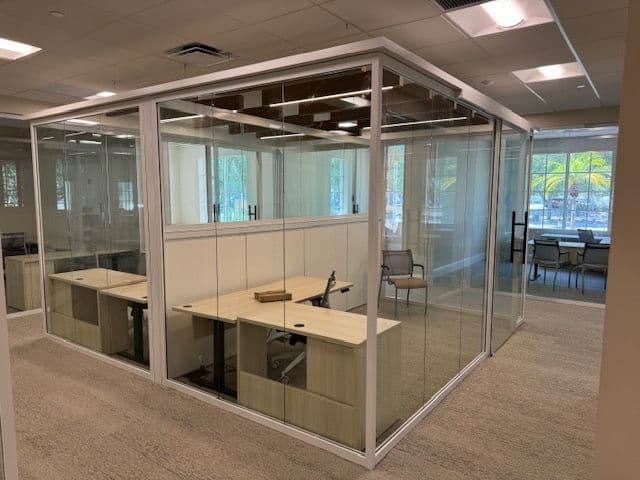
Scope: Height-adjustable workstations in day-lit, glass-fronted offices.
Office ergonomics is the practice of fitting a workspace to the person who uses it — the chair, desk, monitor position, and room around them — so people can work comfortably and move through the day, rather than adapting themselves to furniture that does not fit.
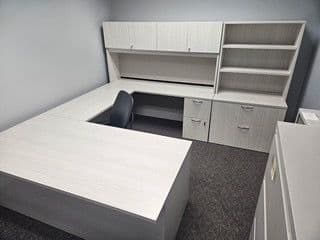
Office ergonomics is the practice of fitting the workspace to the person rather than the other way around. It covers the chair that supports the body, the desk at the right height, the monitor at the right distance and eye level, and the room around them — lighting, reach, and the freedom to change posture through the day. The goal is a setup where a person can work comfortably without adapting their body to furniture that does not fit them.
It is a design discipline, not a product. An "ergonomic" chair on its own does little if the desk is the wrong height or the monitor forces a downward stare all day. Ergonomics is the coordination of the whole workstation and its surroundings, which is why it belongs in the design and specification of a workplace, not in a single accessory bought after the fact.
Because discomfort at the workstation has a cost, and it is one a business carries whether or not it is measured. OSHA reports that work-related musculoskeletal disorders — the strains and disorders associated with how the body is used at work — are among the most frequently reported causes of lost or restricted work time, and that their number, severity, and associated costs can be substantially reduced by applying ergonomic principles.
For an employer, that reframes ergonomics from a comfort perk into an operational decision. A workstation that fits supports focus and reduces the friction of a workday; one that does not shows up as fatigue, distraction, and time away. Rather than attach a single return-on-investment figure that would not hold across every office, OFDC treats ergonomics as a baseline of good workplace design — specified in from the start, where it costs least to get right.
Adjustability that lets the chair fit a range of bodies, not a single average one. The features that matter are the ones a person can tune to themselves: seat height and depth, lumbar support that meets the lower back, armrests that position the shoulders, and a recline or tilt that supports movement rather than locking one posture. A chair is ergonomic when it can be adjusted to the person — not when a label says so.
This is where a Steelcase Authorized Dealer earns its place. OFDC specifies research-backed seating designed to be adjusted and fitted, rather than commodity chairs sold on price, and helps match the chair to the people and the work. The right chair is the one that disappears — the user stops thinking about it because it fits.
The most useful idea in modern ergonomics is that the best posture is the next one. Height-adjustable sit-stand desks matter less because standing is inherently better and more because they let a person change position through the day instead of holding one for eight hours. Movement and variety, supported by furniture that adjusts easily, are what a good workstation makes effortless.
That principle scales beyond the desk. A workplace planned for movement — a mix of seated, standing, and different settings to work from — builds posture variety into the day by design. OFDC specifies height-adjustable workstations, as at the Sarasota Community Foundation, where they fit the way a team actually works rather than as a novelty.
A good chair sits inside a good workstation, which sits inside a well-planned room. Monitor height, keyboard reach, glare and natural light, acoustic comfort, and how far someone has to travel to the settings they need are all ergonomic factors decided at the design and space-planning stage. Solve them there and a single accessory rarely has to compensate later.
That is why ergonomics runs through the rest of OFDC's design work rather than sitting beside it. It is part of space planning, part of workplace design, and part of every furniture specification — the through-line that keeps a well-designed office from being an uncomfortable one.
Founded in 1974, OFDC Commercial Interiors specifies and installs ergonomic workspaces across Southwest Florida from showrooms in Fort Myers and Sarasota, serving Lee, Collier, Charlotte, Sarasota, and Manatee counties. As a Steelcase Authorized Dealer, OFDC works from research-backed seating and adjustable workstations and installs with in-house crews, so the ergonomics specified on paper is the ergonomics that reaches the floor.
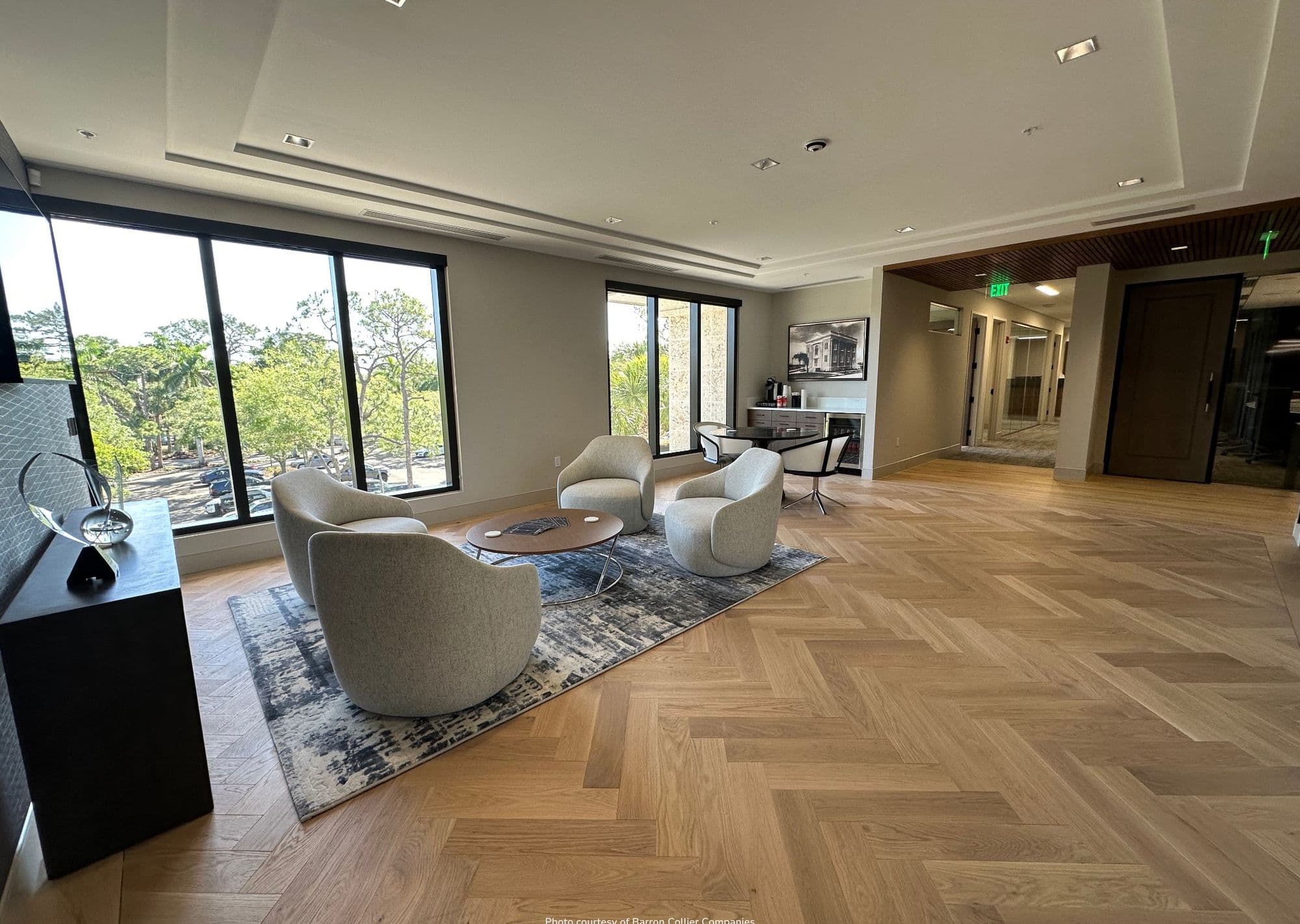
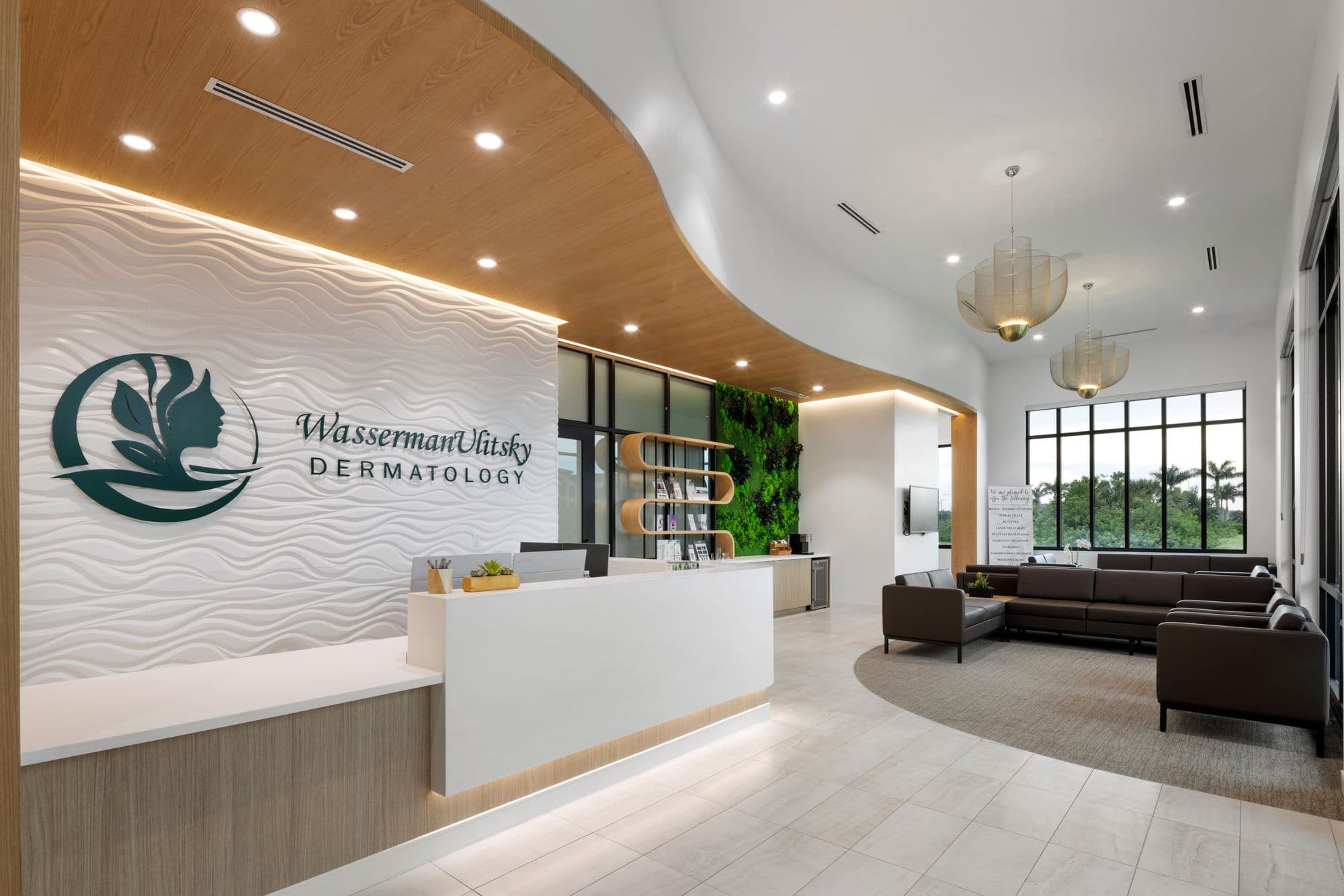
It shows up in the work: the adjustable, supportive workstations at the Collier County Sheriff's Office, the height-adjustable desks at the Sarasota Community Foundation, and the comfortable, day-lit environments at Barron Collier Companies and Wasserman Ulitsky Dermatology — each planned around the people who use it every day.
Sarasota
Scope: Height-adjustable workstations in day-lit, glass-fronted offices.
Fort Myers
Scope: Comfortable, supportive seating across corporate work and social settings.
Venice
Scope: Comfort-focused waiting and reception seating for a medical practice.
Ready to talk through your space? See our commercial furniture & design services.
Book a workspace consultation